
Sciatica Treatment
Sciatica Treatment in Boca Raton, FL
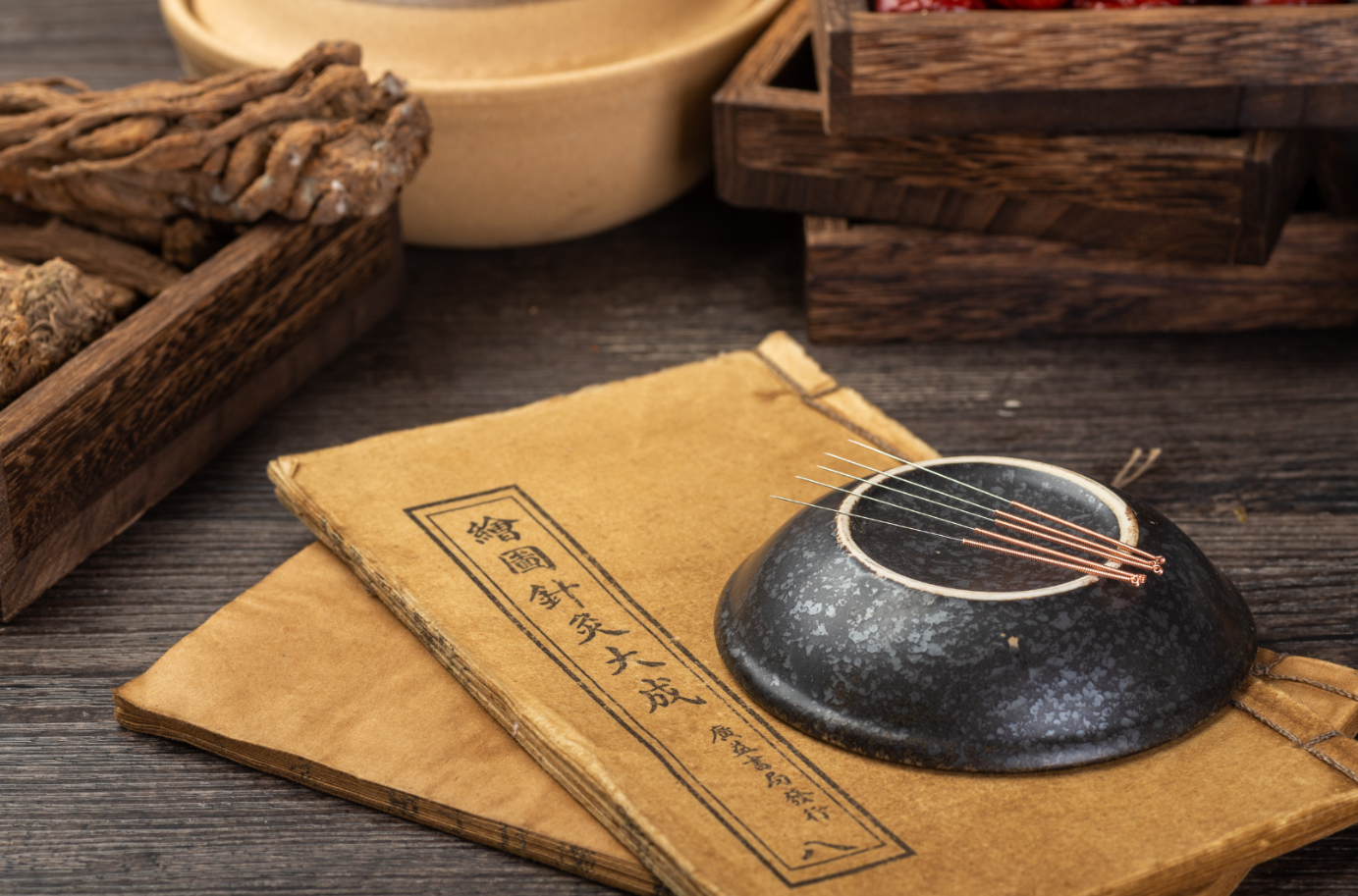
Acupuncture helps ease sciatic pain so sitting, walking, and everyday movement feel more comfortable.
Medically reviewed by Dr. Matthew Winke, DACM, L.Ac. · Last reviewed
What Is Sciatica?
Sciatica is not a diagnosis in itself — it is a set of symptoms caused by irritation or compression of the sciatic nerve or the spinal nerve roots that form it. The sciatic nerve is the largest nerve in the body, created by nerve roots exiting the lower spine and running deep through the buttock into the leg.
When one of those nerve roots is compressed or chemically irritated — most often by a herniated disc, narrowing of the spinal canal, or tight soft tissue along the nerve’s path — the result can be sharp, burning, or electric pain that follows the course of the nerve, often accompanied by numbness, tingling, or weakness in the leg or foot.
Most episodes of sciatica improve over weeks to months with appropriate care. Treatment goals are to calm nerve irritation, address mechanical contributors, and keep you moving safely while your body recovers.
Personalized acupuncture treatment for sciatica focuses on easing radiating leg pain and helping you sit, walk, sleep, and return to daily activity with greater comfort. Treatment follows the path of nerve irritation and the movement demands that matter to you. Each visit uses targeted points and practical goals for pain, mobility, muscle tension, and recovery.
Sciatica is radiating pain that travels along the path of the sciatic nerve — from the lower back through the buttock and down the back of the leg, sometimes reaching the calf or foot. For many people it arrives suddenly, and it can make sitting, driving, sleeping, and exercise genuinely difficult.
At Acupuncture Xperts, Dr. Matthew Winke, DACM, evaluates the source of nerve irritation, activity demands, and movement pattern to design acupuncture treatment for pain relief, mobility, and recovery.
The Science of Acupuncture
See the Sciatica Interactive Guide
See the lower-back nerve pathway and the guide’s focused acupuncture and electroacupuncture sequence.
Prefer a separate window? Open this focused guide in a new tab.
Common Causes
Herniated or Bulging Disc
The most common cause of sciatica — disc material pressing on or inflaming a lumbar nerve root produces radiating pain along the nerve’s path into the leg.
Spinal Stenosis
Age-related narrowing of the spinal canal or the openings where nerves exit can crowd the nerve roots, often causing leg symptoms that worsen with standing and walking.
Piriformis Syndrome
The piriformis muscle runs directly over (and in some people, around) the sciatic nerve in the buttock. When it becomes tight or spasms, it can irritate the nerve and mimic spine-driven sciatica.
Degenerative Changes and Bone Spurs
Wear and tear on discs and facet joints can produce bony overgrowth that narrows the space available for nerve roots.
Spondylolisthesis
When one vertebra slips forward on the one below it, the shift can pinch the nerve roots that form the sciatic nerve.
Prolonged Sitting and Deconditioning
Long hours of sitting, weak core and hip musculature, and sudden spikes in activity all increase the load on the lower spine and the tissues surrounding the nerve.
Symptoms
- Pain radiating from the lower back into the buttock and down the leg
- Sharp, burning, or electric-shock sensations along the leg
- Pain that is worse on one side of the body
- Pain that intensifies with prolonged sitting
- Numbness or tingling in the leg or foot
- Weakness in the leg or foot
- Pain that worsens with coughing, sneezing, or straining
- Deep, persistent aching in the buttock
- Difficulty standing up from a seated position
- Pins-and-needles sensations in the toes
Risk Factors
- Age-related spinal changes (most common between 30 and 60)
- Occupations involving heavy lifting or twisting
- Prolonged sitting or long daily commutes
- Excess body weight
- Diabetes, which increases the risk of nerve irritation
- Smoking
- Sedentary lifestyle with weak core and hip muscles
- Previous episodes of low back pain or sciatica
- Pregnancy
How We Help
Depending on your evaluation, your plan may draw on one or more of the following therapies, often beginning with Acupuncture for Sciatica or Cupping Therapy.
Personalized acupuncture treatment for sciatica targets points along the lower back, hip, and leg to address radiating pain, walking tolerance, sleep, and daily function. Treatment follows the pattern of nerve irritation and the activities you want to resume.
- Easing nerve-related leg pain
- Easing protective muscle spasm in the lower back and hip
- Improving circulation around irritated nerve roots
- Easing buttock and leg trigger-point tension along the nerve path
- Improving sleep during flare-ups
Cupping treatment for sciatica addresses soft-tissue tightness through the lower back, glutes, and hamstrings, with goals of easier movement and less irritation along the sciatic pathway.
Gua Sha treatment for sciatica uses smooth, directed strokes along the posterior hip and leg to address fascial restriction and improve movement through guarded, tender tissue.
Neuromuscular massage treatment for sciatica addresses guarded hip and low-back muscles that contribute to referred leg discomfort. Focused trigger-point work eases tension around the piriformis and deep hip rotators along the sciatic pathway.
Injection Therapy for sciatica targets stubborn gluteal or lumbar trigger points when clinically appropriate. Treatment addresses muscular contributors to sciatic-type pain in the gluteal and lumbar regions.
Infrared PEMF Crystal Therapy for sciatica applies gentle warmth and pulsed energy to encourage relaxation in guarded low-back and hip muscles during flare-ups.
Though our office is in Boca Raton, we regularly treat sciatica patients who drive in from Delray Beach, Boynton Beach, and Deerfield Beach — a short trip that's often easier than living with radiating leg pain.
What the Research Says
Selected research and clinical references for sciatica, with findings and links to the original publications.
Randomized Trial
JAMA Internal Medicine Sham-Controlled Trial — Chronic Sciatica From Herniated Disk
In 216 patients with chronic sciatica from a herniated disc, 10 acupuncture sessions over 4 weeks reduced leg pain roughly twice as much as sham acupuncture (a 30.8 vs 14.9 point drop on a 100-point scale) and improved function significantly more. Benefits appeared by week 2, persisted through a full year, and no serious adverse events occurred.
Tu JF, et al. Acupuncture vs Sham Acupuncture for Chronic Sciatica From Herniated Disk: A Randomized Clinical Trial. JAMA Intern Med. 2024;184(12):1417-1424. View on PubMed →
Meta-Analysis
Acupuncture for Sciatica — 12 trials, 1,842 participants
Pooling 12 randomized trials, acupuncture outperformed conventional Western medication on overall effectiveness, pain intensity, and pain threshold, and the authors concluded acupuncture may be effective for the pain associated with sciatica. A design limitation worth noting: most included trials compared acupuncture with medication rather than sham — a gap the 2024 JAMA trial above helped address.
Ji M, et al. The Efficacy of Acupuncture for the Treatment of Sciatica: A Systematic Review and Meta-Analysis. Evid Based Complement Alternat Med. 2015;2015:192808. View on PubMed →
Clinical Guideline
American College of Physicians — Low Back Pain Guideline
The ACP recommends acupuncture as a first-line, non-drug treatment for chronic low back pain — a category that includes many patients whose pain radiates into the leg — and as a treatment option for acute low back pain, before reaching for medication.
Qaseem A, et al. Noninvasive Treatments for Acute, Subacute, and Chronic Low Back Pain: A Clinical Practice Guideline From the American College of Physicians. Ann Intern Med. 2017;166(7):514-530. View on PubMed →
Meta-Analysis
Acupuncture for Chronic Pain — 39 trials, 20,827 patients
Across 39 high-quality randomized trials, acupuncture was superior to both sham acupuncture and no-acupuncture controls for chronic pain, with back and neck pain — the category most relevant to sciatica — the largest group studied. Effects persisted over time and could not be explained by placebo alone.
Vickers AJ, et al. Acupuncture for Chronic Pain: Update of an Individual Patient Data Meta-Analysis. J Pain. 2018;19(5):455-474. View on PubMed →
Acupuncture is not a substitute for emergency evaluation when red-flag symptoms are present, and individual results vary. During your consultation we will review your history, symptoms, and any imaging, and discuss what this research may mean for your specific case.
These summaries are educational and describe published research; they are not a guarantee of individual results.
Exercises & Self-Care
Clinical guidelines for low back pain with sciatica consistently encourage staying active rather than resting in bed. Gentle, regular movement helps keep the sciatic nerve gliding freely, the spine mobile, and the supporting muscles engaged while the underlying irritation settles.
With sciatica in particular, let your leg be the judge: mild discomfort near the spine is generally acceptable, but stop any movement that pushes pain, numbness, or tingling farther down the leg. The examples below are conservative starting points that complement in-office care — not a personalized program. We tailor movement recommendations during your visit.
Nerve Mobility
Seated Sciatic Nerve Glide
- Sit upright on a sturdy chair with both feet flat on the floor, hands resting at your sides, and your back away from the backrest.
- Slowly straighten the affected leg out in front of you until the knee is extended, pulling your toes back toward you — and at the same time, gently look up toward the ceiling.
- Then reverse the motion: bend the knee and lower the foot back to the floor while tucking your chin toward your chest.
- Move slowly and rhythmically between the two positions — this is a gentle “flossing” motion for the nerve, not a stretch to be held.
How much: 10 slow reps per session, 1–2 times daily
Stop immediately if this increases pain, numbness, or tingling down the leg.
Stretch
Figure-4 Piriformis Stretch
- Lie flat on your back on the floor or a firm mat with both knees bent and feet flat on the ground.
- Cross the ankle of the affected leg over the opposite knee, letting the crossed knee fall gently outward — your legs will form the shape of the number 4.
- Reach through the gap and grasp the back of the supporting thigh with both hands.
- Gently pull the supporting thigh toward your chest until you feel a comfortable stretch deep in the buttock of the crossed leg.
- Hold while breathing normally, then slowly release and switch sides.
How much: 3 holds of 20–30 seconds per side, once daily
A deep buttock stretch is fine — stop if pain shoots down the leg.
Extension Mobility
Prone Press-Up Progression
- Lie face down on the floor or a firm mat with your legs straight, arms bent, and palms flat on the floor beneath your shoulders.
- Begin by propping yourself up on your forearms (the “sphinx” position) and rest there for a few breaths, letting your lower back and hips relax toward the floor.
- If that feels comfortable, press through your hands to slowly straighten your arms, lifting your chest while keeping your hips and pelvis on the floor.
- Rise only as far as feels comfortable, pause briefly at the top, then lower back down with control.
How much: 2 sets of 10 slow reps, once or twice daily
This progression often suits disc-related sciatica, but responses vary — stop if leg symptoms intensify or spread farther down the leg.
Core Activation
Pelvic Tilt
- Lie flat on your back on the floor or a firm mat with your knees bent, feet flat on the ground hip-width apart, and arms resting at your sides.
- Gently flatten your lower back into the floor by tightening your abdominal muscles and tilting your pelvis slightly upward.
- Hold for 5 seconds while breathing normally.
- Relax back to the starting position with control.
How much: 2 sets of 10, once daily
Mobility
Lower Trunk Rotation
- Lie flat on your back on the floor or a firm mat with your knees bent and together, feet flat on the ground, and arms out to your sides in a T position.
- Keeping both shoulders on the floor, slowly let your knees rock a few inches to one side.
- Pause, return to center, then rock gently to the other side.
- Stay within a small, comfortable range — this is a gentle rocking motion, not a deep twist.
How much: 10 slow rocks per side, once daily
Stop any exercise that sharply increases pain, or causes numbness, tingling, or pain radiating into a limb, and consult a qualified provider. These general examples are educational and do not replace an individual evaluation.

Acupuncture Treatment for Sciatica
Personalized, non-surgical care from Dr. Winke and the Acupuncture Xperts team.
What to Expect
Your Care Journey
- 01
Initial Consultation
Care begins with a thorough conversation about your health history, lifestyle, and specific goals for addressing your sciatica.
- 02
Evaluation
We assess the underlying contributors — movement, posture, muscular patterns, and overall wellness — to understand what may be driving your symptoms.
- 03
Personalized Treatment
Based on your evaluation, we build a customized plan that may combine several complementary therapies suited to your individual needs.
- 04
Supporting Recovery
Beyond in-office care, we offer guidance on movement, ergonomics, and lifestyle adjustments to help support lasting results.
- 05
Our Approach
We focus on conservative, non-surgical, whole-person care aimed at addressing root contributors rather than only masking symptoms.
- 06
Why Patients Choose Us
Patients throughout South Florida choose Acupuncture Xperts for our individualized, integrative approach and our commitment to long-term wellness.
Frequently Asked Questions
Most people describe sharp, burning, or electric pain that starts in the lower back or buttock and travels down the back of the leg, sometimes with numbness, tingling, or weakness. It is usually worse on one side.
Research suggests it may. A 2024 randomized trial in JAMA Internal Medicine found acupuncture reduced sciatic leg pain significantly more than sham acupuncture, with benefits lasting up to a year. Individual results vary, and we review the evidence with you during your consultation.
Many episodes improve substantially within 4–6 weeks, though some cases persist for months. Symptoms lasting beyond a few weeks, or those that are worsening, warrant professional evaluation.
Not exactly. A herniated disc is the most common cause of sciatica, but sciatica can also arise from spinal stenosis, piriformis syndrome, and other sources of nerve irritation. Identifying the driver helps shape the treatment plan.
Not usually. Most sciatica can be evaluated clinically, and guidelines reserve imaging for red-flag symptoms, progressive weakness, or pain that fails to improve with conservative care. If you already have imaging, bring it — it helps inform your plan.
Prolonged sitting, heavy lifting with a rounded back, and complete bed rest tend to aggravate symptoms. Gentle, frequent movement within a comfortable range is generally encouraged.
It varies with severity and duration. As a reference point, the 2024 JAMA trial used 10 sessions over 4 weeks. We outline a recommended course after your initial evaluation and adjust based on your response.
Seek emergency care immediately if you develop loss of bladder or bowel control, numbness in the groin or inner thighs, or rapidly progressing leg weakness. These can signal cauda equina syndrome, which requires urgent medical attention.
Yes. Many of our sciatica patients come from surrounding Palm Beach and Broward communities — Delray Beach, Boynton Beach, Deerfield Beach, and Parkland among them. We're at 621 NW 53rd Street in Boca Raton, just off I-95, with parking out front and in the rear garage.
When to Seek Professional Care
- Leg pain persists beyond a few weeks
- Pain is severe or steadily worsening
- Numbness or tingling is spreading
- Leg weakness or foot drop develops
- Pain follows an accident or fall
- Symptoms interfere with work, sleep, or daily activities
- Loss of bladder or bowel control occurs — seek emergency care immediately
Ready to make sitting, walking, and sleep more manageable? Start personalized acupuncture treatment for sciatica in Boca Raton, focused on calming nerve irritation and improving mobility.
Sciatica can turn a car ride, a night of sleep, or a round of golf into an ordeal. Acupuncture treatment is tailored to the location of nerve irritation and the activities you want to resume.
At Acupuncture Xperts, our team evaluates your symptoms and builds a focused plan for walking, sleep, and daily movement. We serve patients throughout Boca Raton, Delray Beach, Deerfield Beach, Highland Beach, Boynton Beach, Palm Beach County, and surrounding South Florida communities.
Have questions or ready to begin? Contact our Boca Raton clinic to get started.
Serving Boca Raton, Delray Beach, Deerfield Beach, Highland Beach, Boynton Beach, Palm Beach County.
Acupuncture Treatment for Sciatica
Book a visit and we’ll build a personalized plan together.